02 Oct 2026 · Structural Practice & Codes · Panthera Nestah
Transitioning from BS 8110 to Eurocode 2: Optimizing Rebar Detailing for Kenyan Commercial Construction
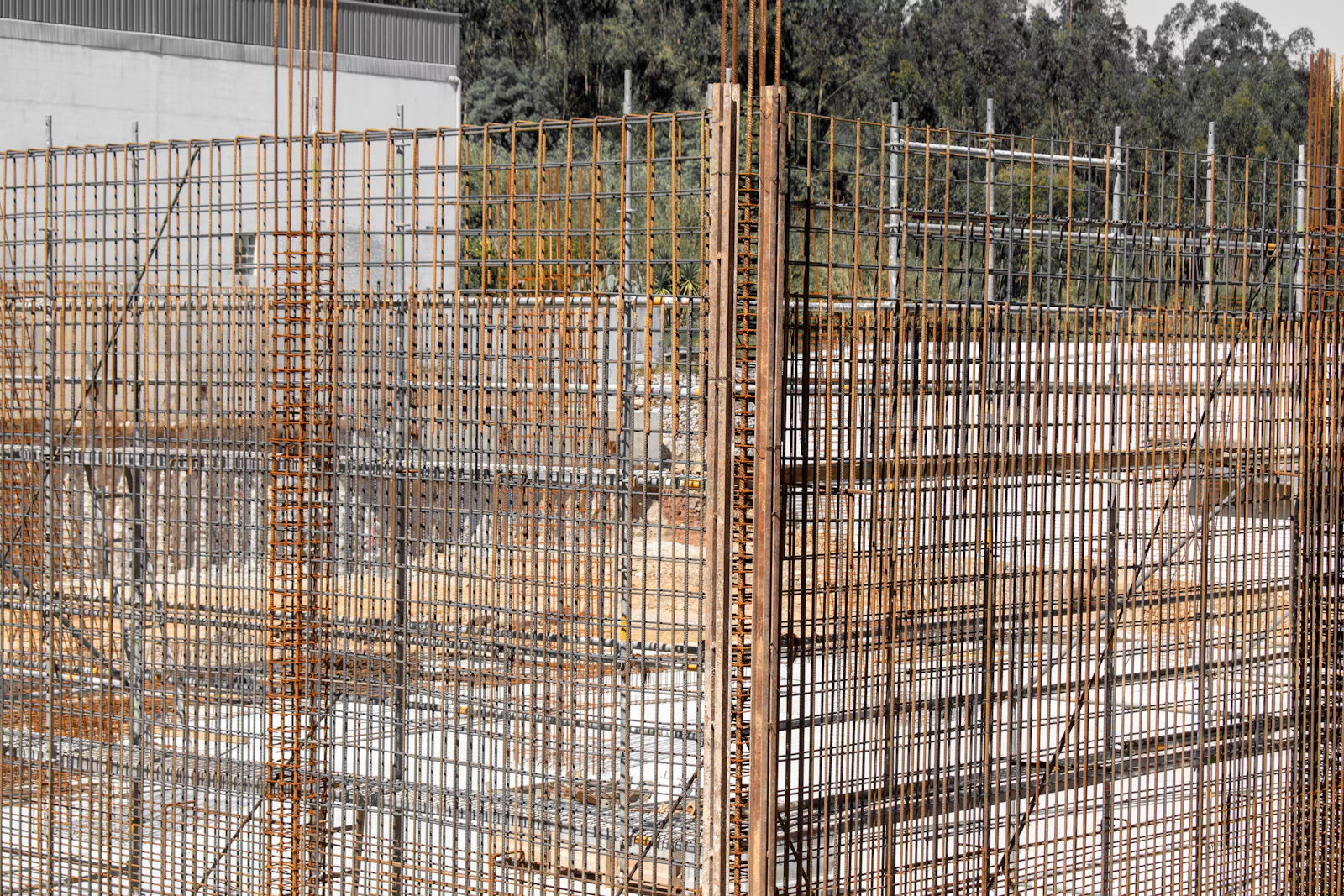
For more than three decades, the Kenyan civil engineering sector has leaned on the British Standard for structural concrete (BS 8110:1997). However, with the British Standards Institution withdrawing BS 8110 and the Kenya Bureau of Standards (KEBS) adopting the Kenya National Annexes to the Eurocodes (KS EN 1992-1-1 / Eurocode 2), engineering practices across Nairobi are transitioning. Far from being a mere regulatory obligation, designing to Eurocode 2 unlocks dramatic material efficiencies and superior structural performance.
1. High-Yield Steel Strengths ($f_{yk} = 500 \text{ MPa}$)
BS 8110 primarily predicated its standard design charts on Grade 460 rebar. In contrast, Eurocode 2 fully exploits modern thermo-mechanically treated (TMT) high-tensile rebar with characteristic yield strengths of 500 MPa ($f_{yk}$) or higher (Grade 500B / 500C). This higher design yield threshold translates directly into smaller required cross-sectional bar areas ($A_{s,req}$) across tension-governed beams, suspended slabs, and raft foundations.
2. The Variable Strut Inclination Method for Shear
One of the most consequential advancements in Eurocode 2 is the variable strut inclination method for shear reinforcement design. While BS 8110 assumed an arbitrary empirical 45-degree concrete compression strut angle ($\theta = 45^\circ$), Eurocode 2 allows the designing engineer to vary $\theta$ between $21.8^\circ$ and $45^\circ$ ($1.0 \le \cot\theta \le 2.5$).
By optimizing $\cot\theta$ in deep commercial transfer beams, the required shear link capacity is significantly lowered. On typical Kenyan mid-rise commercial frames, this reduces shear link rebar tonnage by 18% to 25%, drastically decreasing congestion at column-beam junction nodes and ensuring easier concrete compaction during vibrator poker insertion.
3. Realistic Lap Length Calculations
BS 8110 enforced rigid, conservative rule-of-thumb lap lengths (typically $40\phi$ in tension and $50\phi$ in compression). Eurocode 2 replaces this with a nuanced formula factoring in concrete tensile strength ($f_{ctd}$), bar bond conditions ($\eta_1, \eta_2$), concrete cover dimensions, and transverse confinement reinforcement. For large-diameter reinforcement (Y20, Y25, Y32), Eurocode lap detailing avoids hundreds of kilograms of redundant steel overlaps in tall building columns.
Summary for Developers
Consulting engineering firms that master Eurocode 2 deliver tangible cost savings to their clients. On a typical 10-storey commercial development in Nairobi requiring 600 tonnes of reinforcement steel, value engineering with EN 1992-1-1 saves an estimated KES 8 to 12 Million in steel purchasing and transport costs alone.